
From our lecture that was based around habit forming, we were set a task to analyse the Duolingo and Headspace apps and discuss how they use certain habit forming techniques that we could possibly incorporate into our app. As both apps require or encourage an everyday habitual use, we felt this was very relevant to and similar to what we want to achieve with our app.
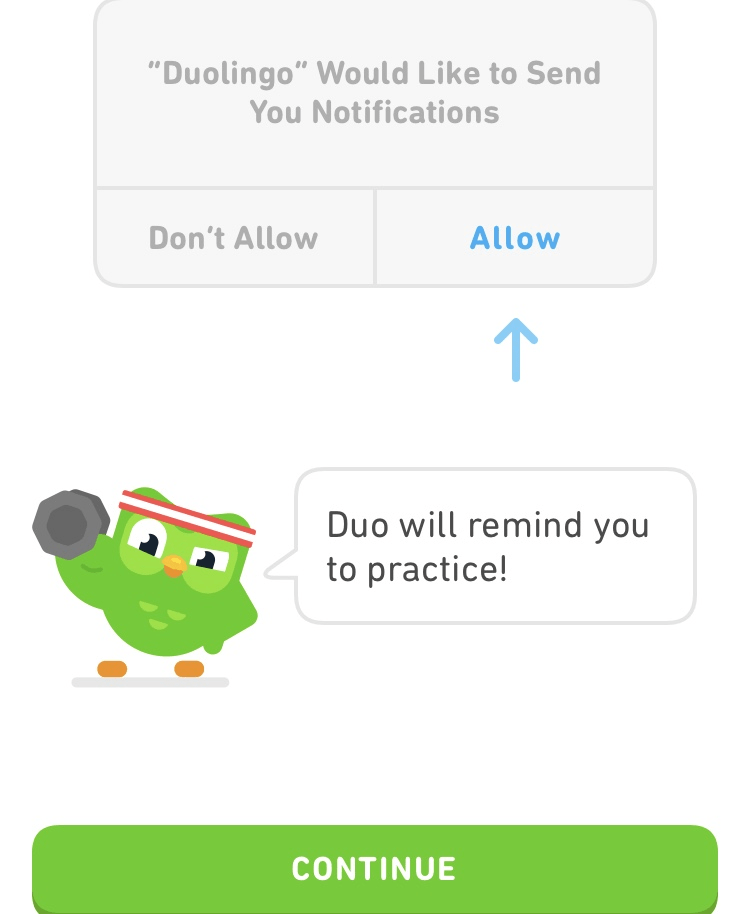
Both apps use a variety of similar triggers, both external and internal, to encourage habitual use from their users. External triggers are essentially features that allow us to interact with the app, such as buttons. In this instance both apps we looked at featured many visually pleasing and colourful buttons that encourage users to press them, especially in the ‘introduction’ phases. For example, Duolingo has a feature that highlights new words yellow, encouraging users to press on them which rewards them with the translation as well as an audio pronunciation. Duolingo also heavily pushes users to turn on notifications, giving users frequent reminders to use the app. Nir Eyal states that the easier triggers are to identify and interact with, the more likely the user is to engage with it and form a habitual relationship. We have kept that in mind with the design of our app, using colourful triggers on the menu screen in the aim of enticing more users to form a habitual relationship with Adjust.
From our lecture we learned about Eyal’s hook model which explores the process in how habits are formed. The model basically claims that triggers lead to an action, then a reward, then investment. In order to gain investment and form a habitual relationship with the user, it is imperative that the user receives some form of reward for activating such trigger. Eyal states that there are three categories of reward, labelling them; The Tribe, The Hunt and The Self. Understanding each type of reward could prove useful in creating our app and ensuring it has habit forming features. The Tribe describes rewards based on social elements such as cooperation and competition. To achieve this type of reward in our app, users could share their meal plans with others or recommend food joints to others. The Hunt describes rewards that are based around our desire to seek and gather. Again, this reward could be achieved through activating the ‘food joints near you’ button on the menu screen. Finally, the self category of reward describes rewards that are self fulfilling or gives us self satisfaction. As our app is essentially based around self fulfillment and improving your health, there are many triggers that may achieve such form of rewards, such as the schedule button/page.
Now we have discovered how apps may form habitual relationships with their users, it is time for us to go away and consider more ways our app can do so.
 Synergy Media